Hybrid Funds Decoded: Which One Matches How You Actually Behave in a Crash
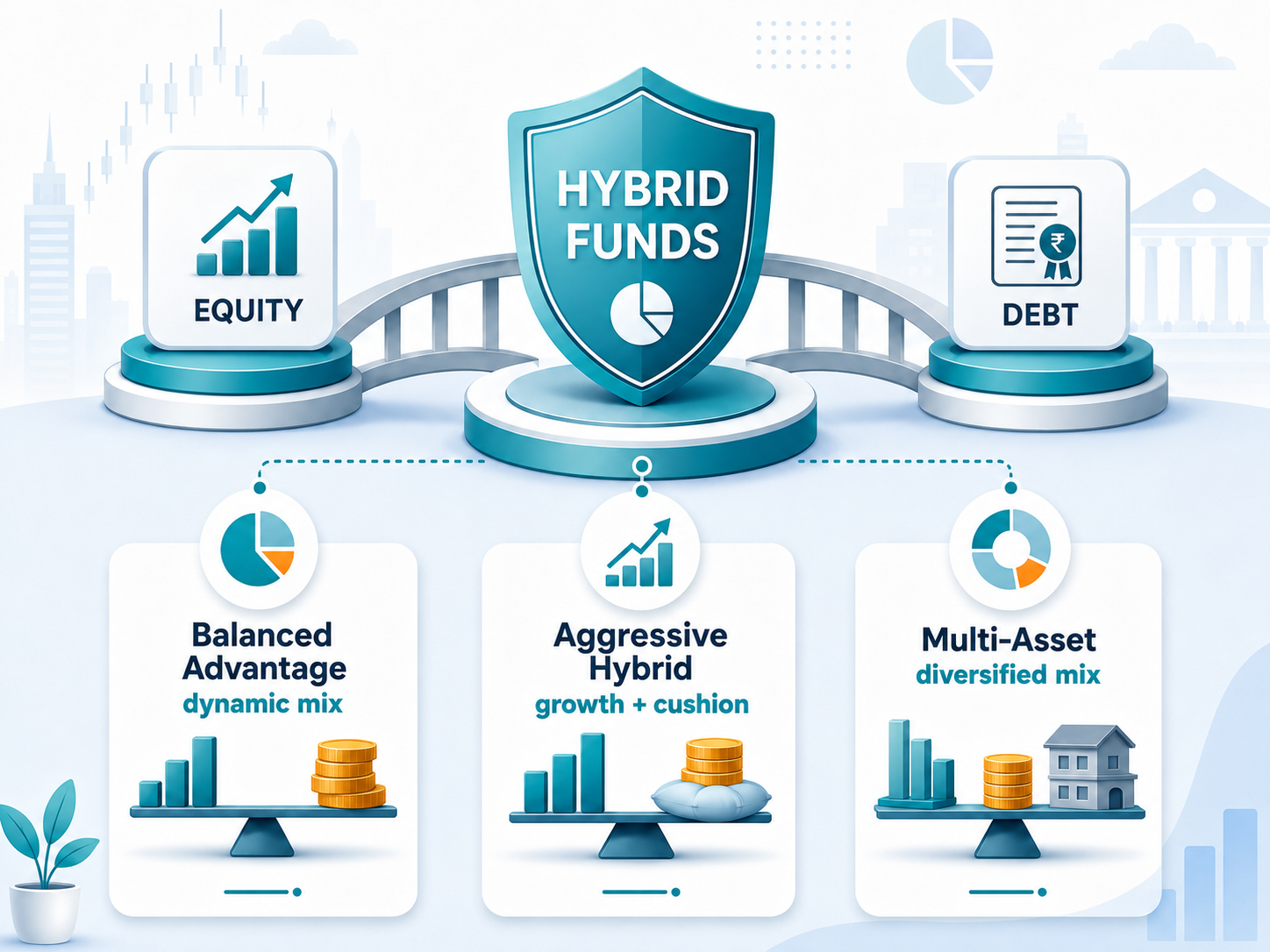
Most Indian investors think in binaries: you’re either an equity person or a debt person. 80-20, 50-50, full stocks, or full bonds. What sits in between, a vehicle that doesn’t just hold both but actively arbitrates between them, doesn’t get attention.
Hybrid funds exist. Most investors skip them.
Why They Matter
You chase equity after rallies. You panic-buy debt after crashes. You promise quarterly reviews and forget. Hybrid funds enforce discipline automatically, rebalancing without emotion.
The gap between what an average fund returns and what an average investor actually earns is largest in single-asset funds. In hybrids, that gap shrinks. Not because hybrids are smarter. But because they remove the one variable that destroys wealth: you.
The Three Types, Built For Different Temperament
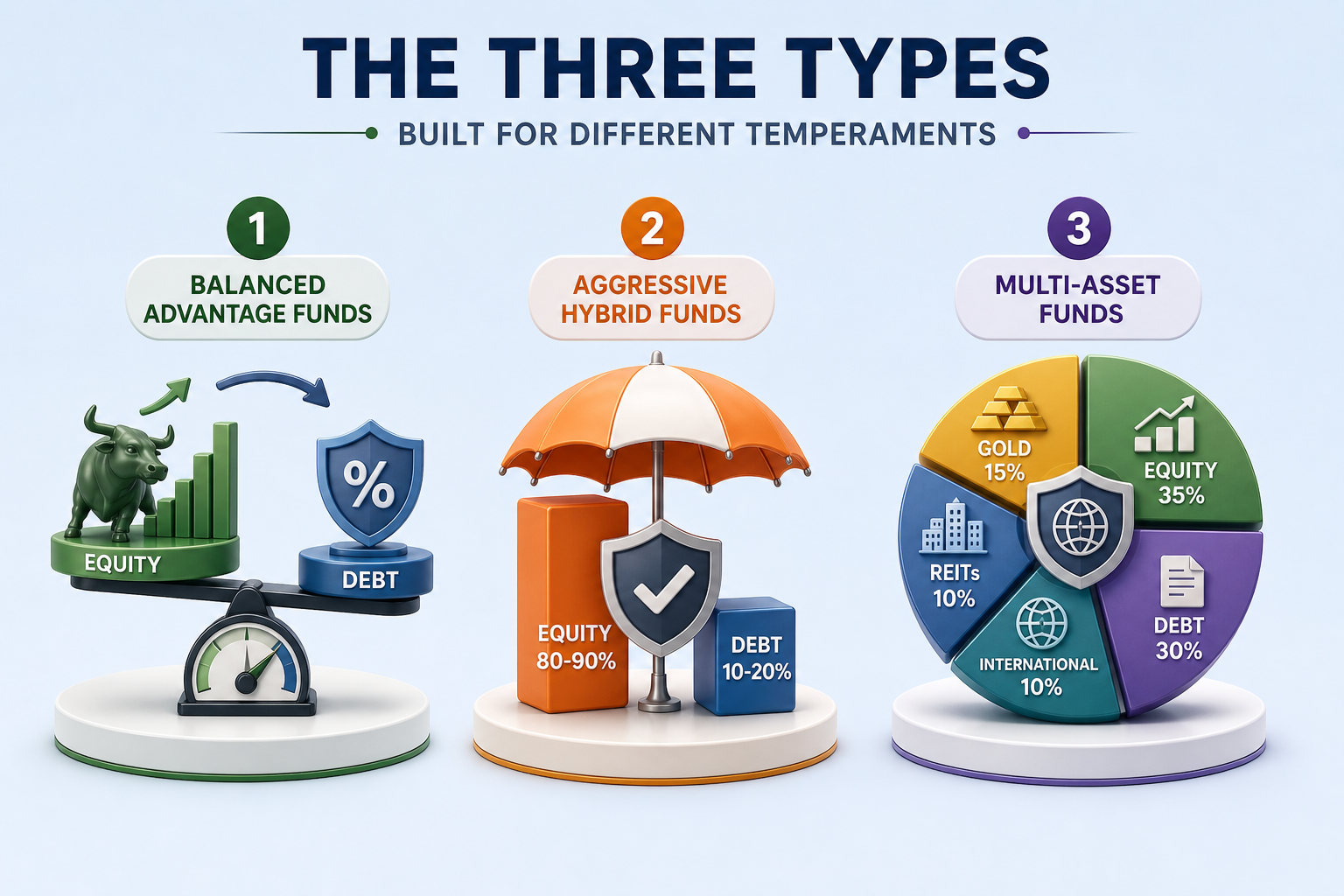
- Balanced Advantage Funds, For the Indecisive InvestorDynamic allocation based on valuations. Overvalued? Raises debt. Undervalued? Loads equities. Maintains 65%+ equity exposure for equity tax treatment (20% long-term capital gains).
Built for: Poor market timers, those wanting automatic volatility dampening, anyone who self-sabotages during crashes. - Aggressive Hybrid Funds, For the Equity Investor Who Needs Insurance65-80% equities, 20-35% debt. A 30% equity crash becomes 24% portfolio crash. That 6% cushion often determines whether you stop the SIP or keep going.
Built for: Young professionals (25-40) who psychologically struggle with volatility, SIP investors prone to panic-stopping. The 2020 proof: Pure equity fell 30-35%, aggressive hybrids fell 22-26%. Investors kept going. Over 5 years, wealth gap was 200%+. - Multi-Asset Funds, For Those Who Want Complete DiversificatiBeyond equity-debt: 35% equities, 30% debt, 15% gold, 10% REITs, 10% international. Natural hedges built-in, gold rises when equities fall. Classified as debt funds for t purposes.
Built for: Investors who want zero allocation thinking, those nearing retirement, people with low volatility tolerance
How to Use Hybrids
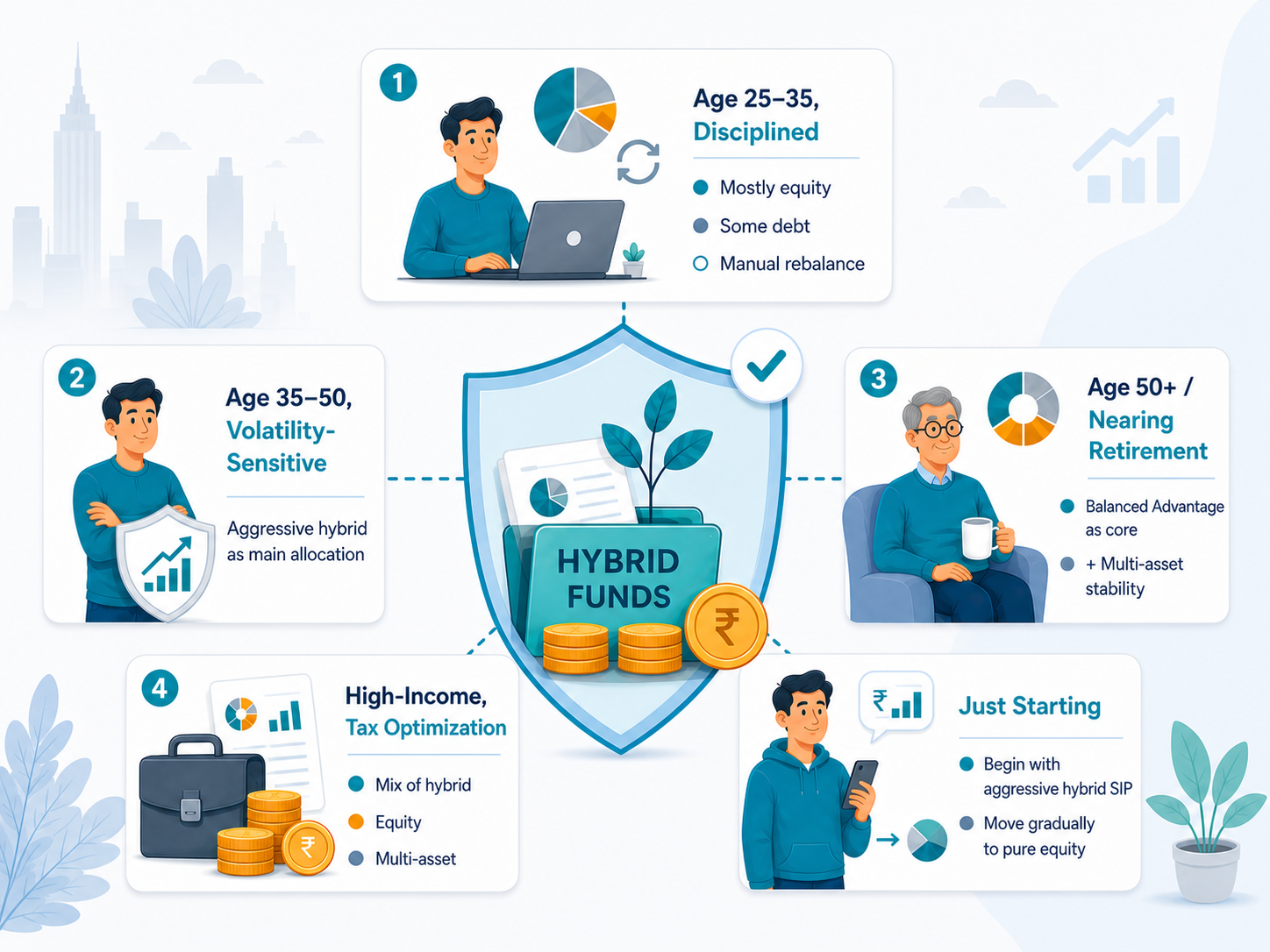
Age 25-35, disciplined: Skip hybrids. Go 80% equity, 20% debt, rebalance manually.
Age 35-50, struggle with volatility: 60% aggressive hybrids, 20% pure equity, 20% direct stocks.
Age 50+ or nearing retirement: 60-70% balanced advantage (core), 20-30% multi-asset (stability).
High-income, tax optimization: 40% hybrid, 40% equity direct funds, 20% multi-asset.
Just starting: Begin with aggressive hybrid SIP. Graduate to pure equity as your confidence grows. It’s financial kindergarten, not forever, but perfect for beginning
The Bottom Line
Hybrids aren’t built to beat the market. They’re built to beat yourself, keeping you invested through cycles instead of panic-selling.
The investors who wish they hadn’t skipped it? They’re not wishing for higher returns. They’re wishing they’d stayed invested long enough to capture the returns that were always there