The Psychology of SIP Stoppage
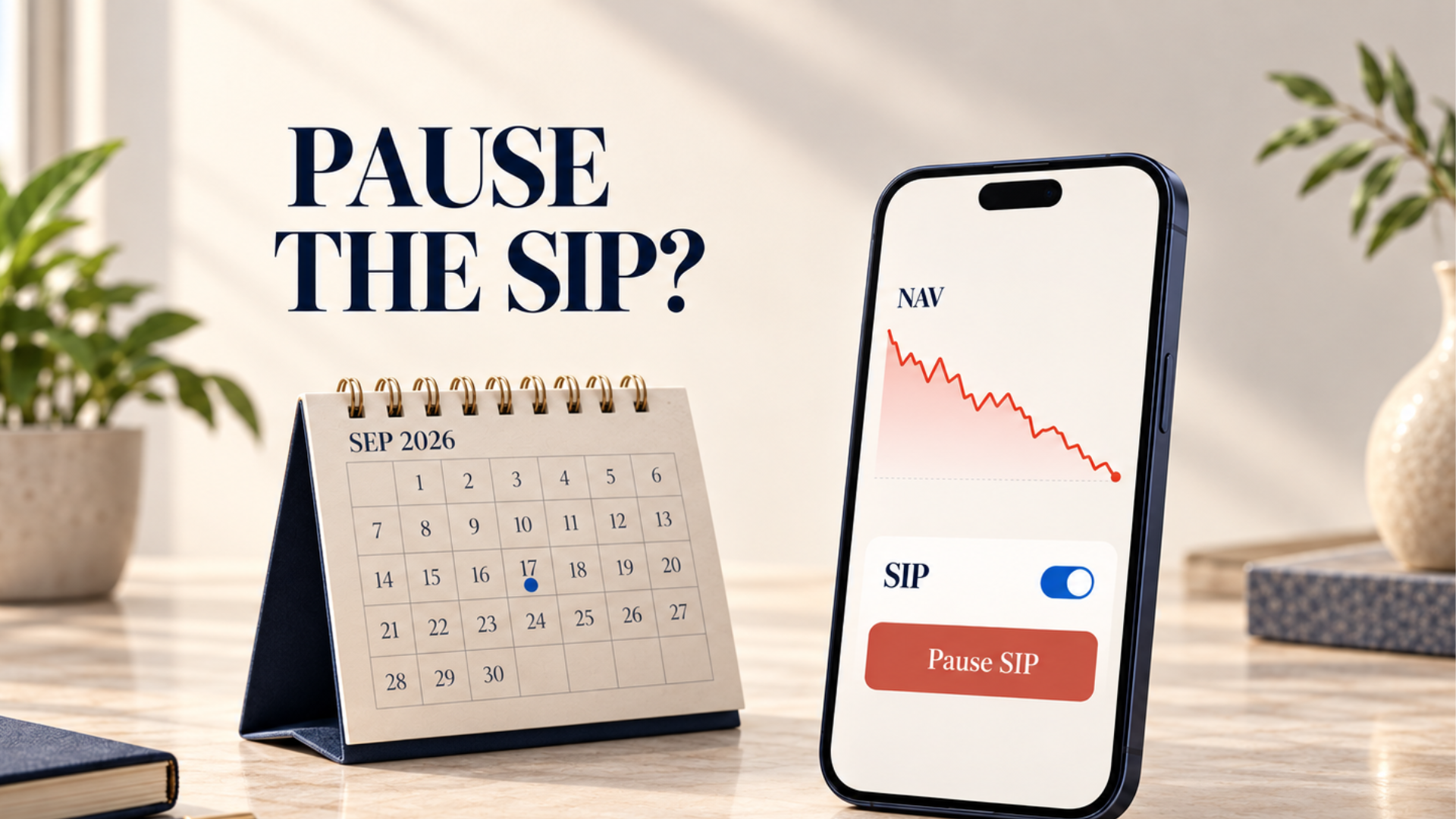
Let’s be honest. At some point, most of us have either paused a SIP or seriously thought about it.
Not because we did the math and it didn’t work out. Not because our financial goa changed overnight. But because the market was doing something scary, the portfolio was bleeding red, and somewhere in the back of our heads, a voice said -“maybe just pause it for a bit.”
That voice? It’s not logic. It’s anxiety. And it’s quietly one of the biggest wealth-destroyers in retail investing.
Your brain is not built for this
Here’s the thing -your brain is ancient. It’s wired to avoid pain, not accumulate wealth. When a market falls 15%, your brain doesn’t process it as “cheaper units incoming.” It processes it the same way it would process, say, a predator in the bushes. Threat detected. Do something. Now.
This is loss aversion -losses hurt about twice as much as equivalent gains feel good. So a ₹50,000 drop in your portfolio hits harder than a ₹50,000 gain ever felt. And the most natural response to that pain? Stop the SIP. Just temporarily. Just until things get better.
Except “better” never sends you a calendar invite.

The illusion of doing something Stopping
a SIP feels like a decision. And in moments of anxiety, making any decision feels better than sitting still.
Psychologists call this the illusion of control. You feel like you’ve acted wisely, cut your losses, played it smart. But what you’ve actually done is stepped off the escalator right before it started going up -and missed buying units at the cheapest prices of the year.
The cruel irony: SIP stoppages rarely happen at market peaks. They happen after the fall, when the market has already done the damage and the recovery is quietly underway.
We’re terrible at imagining the future
There’s another bias at play here -present bias. Whatever is hurting right now feels enormous. Whatever happens 10 years from now feels abstract and distant.
So a rough quarter feels like a catastrophe. A missed decade of compounding? That doesn’t feel like anything at all -until it does. By then, it’s too late to go back and restart that SIP you paused in March 2020.
(Ask anyone who stopped their SIP during the COVID crash. The Nifty recovered within months. The units they missed buying at 7,500 are now a different story.)
It’s all about the story you tell yourself
Here’s a small but powerful shift: instead of thinking “I’m sending money into a falling market”, try “my SIP just got cheaper.” Same action. Completely different emotional experience.
This isn’t just positive thinking. Reframing is a documented behavioural tool. Investors who genuinely internalise the rupee-cost averaging logic -not just intellectually, but emotionally -are far less likely to bail during downturns.

So what actually works?
A few simple things that behavioural research backs up:
● Check your portfolio less. Monthly check-ins add anxiety, not information.
● Watch units, not rupees. Your corpus growing in units feels steadier than watching NAV fluctuat
● Write down your goal before you start. Investors with a documented “why” are significantly harder to shake when things get bump
The market will always hand you a reason to stop. A war somewhere, an election, a rate hike, a crash, a correction. The question isn’t whether a reason exists.
The question is whether your SIP is bigger than the reason.