India’s First Tokenised Bond — What It Actually Means for You
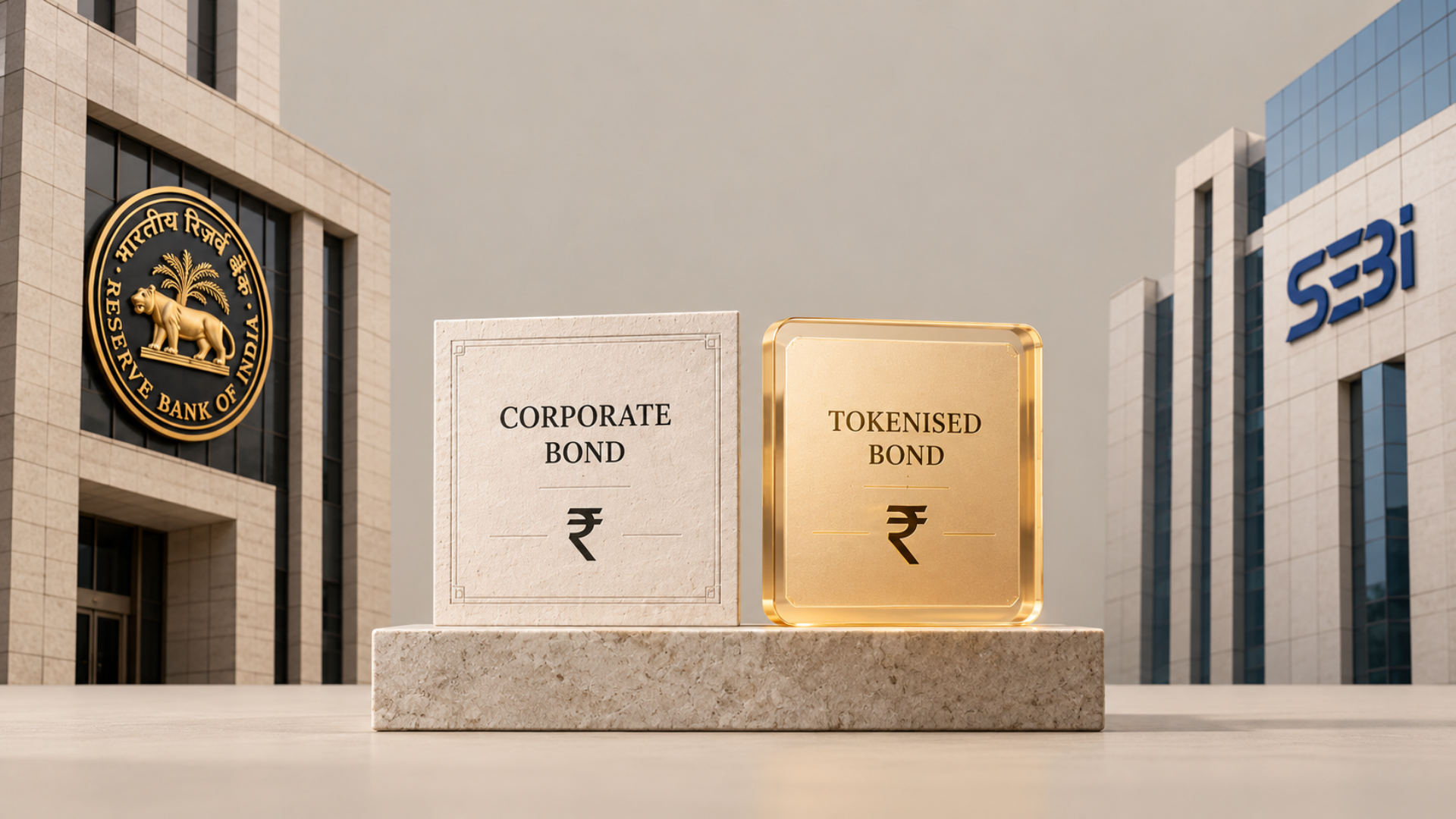
If you’ve seen the headline and wondered whether this is just another finte buzzword moment, fair enough. But this one is worth understanding — because if it scales, it changes how you’ll invest in debt instruments going forward.
Here’s a clean breakdown.
What Happened
On September 7, 2026, REC Limited — the state-owned power financier successfully issued ₹500 crore of tokenised corporate bonds, marking India’s fir pilot under SEBI’s Regulatory Sandbox Framework.
The pilot was formally launched by RBI Governor Sanjay Malhotra and SEBI Chairman Tuhin Kanta Pandey at Global Fintech Fest 2026, combining blockchain technology and the central bank digital currency (CBDC) for securities settlement.
What Is a Tokenised Bond, Actually
A regular bond exists as a paper contract or a Demat entry. A tokenised bond is the same instrument — same issuer, same coupon, same repayment obligation — but recorded on a distributed ledger (blockchain) as a digital token.
The bond doesn’t become crypto. It stays a regulated debt security. Only the plumbing changes.
Dematerialisation removes paper certificates. Tokenisation goes a step further — represents the asset through ledger-based digital units, enabling programmable and automated transaction logic via smart contracts.
What’s New About the Settlement
The most significant upgrade is in how the transaction settle
The pilot uses Distributed Ledger Technology (DLT) and RBI’s wholesale Central Bank Digital Currency (e₹-W) for transaction and settlement.
This enables what’s called atomic settlement — delivery of the bond and payment occur simultaneously, reducing principal risk. Today, there’s always a window between when bonds change hands and when money moves. That window carries counterparty risk. Atomic settlement closes it entirely.
The Secondary Market Question
This is the part most relevant to investors.
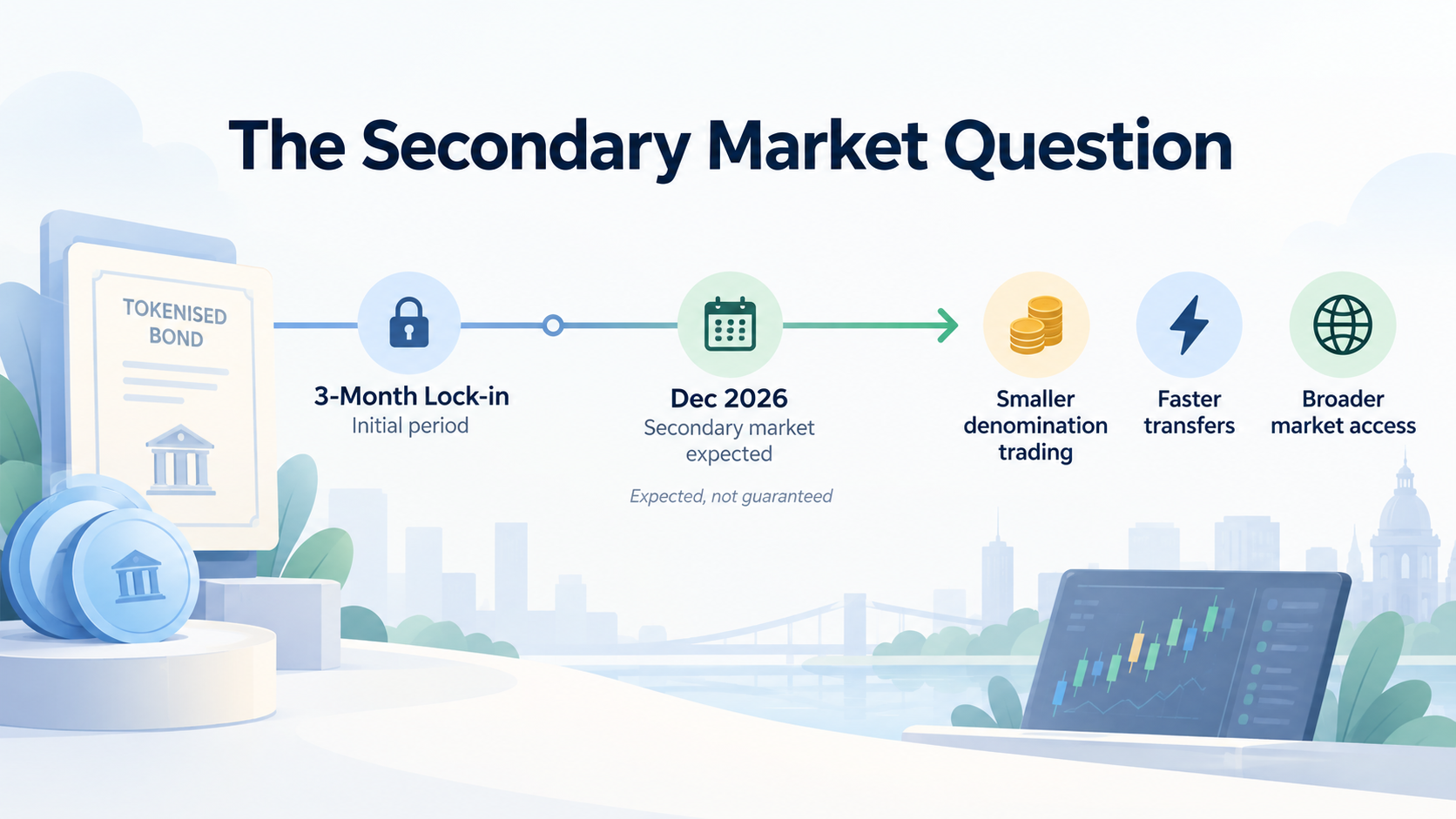
The bonds carry an initial 3-month lock-in period, and exchanges are expected to develop a secondary market for tokenised bonds by December 2026.
Once a secondary market exists, tokenisation could unlock meaningful changes — smaller denomination trading, faster transfers, and eventually, broader access to corporate bond markets that today are largely accessible only to institutions.
Is This for Regular Investors Right Now?
No — not yet.
The scale of this pilot remains small compared with the broader corporate debt market. SEBI data show ₹78,063 crore of corporate bonds were privately placed during July 2026 alone across 164 issues. The ₹500 crore REC transaction is primarily an infrastructure test.
But the long-term scope is significant. The framework could eventually be expand to other financial assets — including stocks, mutual fund units, and electronic go receipts.
What It Could Mean Once It Scales
● Fractional ownership of bonds — lower ticket sizes, wider access
● Faster settlement — no T+1 or T+2 delays, near-instant
● Programmable payouts — coupons automatically credited via smart contracts
● More liquidity in corporate bonds — a market that’s historically been illiquid for retail investors
The Bottom Line
If successful, the REC pilot may well be remembered not merely as India’s fir tokenised corporate bond issuance, but as an important early step towards the next generation of India’s securities-market infrastructure.
For now, it doesn’t change anything about how you invest. But it signals where the rails are being built. Corporate bonds — which have traditionally been the domain of HNIs and institutions — could gradually become more accessible, more liquid, and cheaper to transact in.
That’s worth paying attention to.