Indian IT in the AI Race: Behind, But Not Out
“AI is no longer a choice, but a necessity; it is now what clients expect to get done to improve customer experience and operational efficiency.” — Salil Parekh, Infosys CEO,
ChatGPT launches. The world loses its mind. Then DeepSeek arrives from China and slashes AI costs overnight. Meanwhile, every analyst on the planet asks the same uncomfortable question: where is India?
For a country whose entire economic identity is built on software services, this is a deeply unsettling moment. The US and China are building the engines of the AI era. India, it seems, is still mostly servicing other people’s cars.
So is this the beginning of a long decline? Or is something else going on?
How Far Behind Is India, Really?
Let’s start with the hard truth.
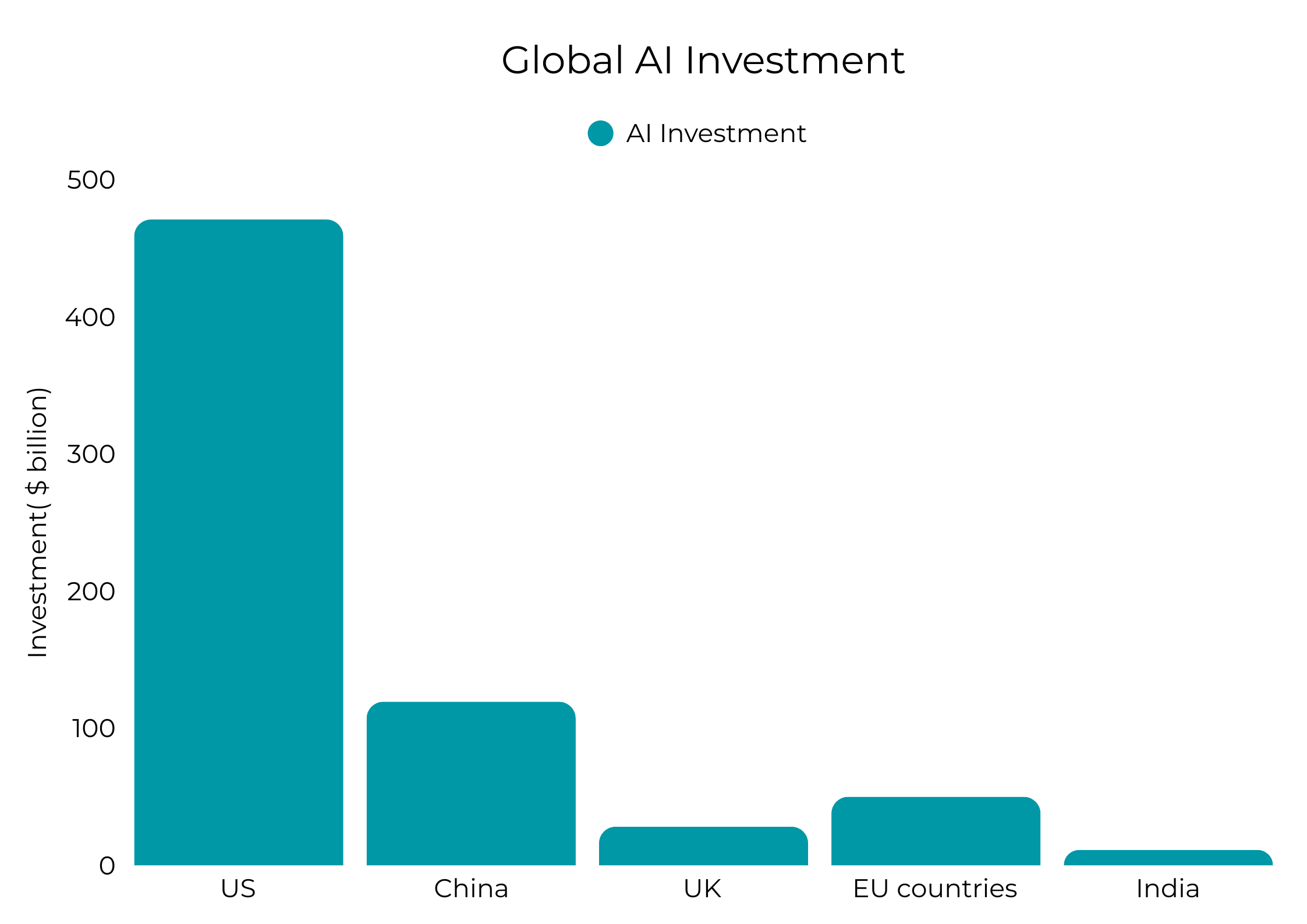
Since 2013, the US has attracted $470.9 billion in private AI investment. China pulled in $119.3 billion. India? Just $11.29 billion. Even the UK attracted $28.2 billion over the same period. A World Economic Forum (WEF) white paper co-authored with Bain & Company ranks India 8th out of 11 countries when cumulative AI investment (2010–2024) is measured as a percentage of GDP.
India’s IT sector was built on labour arbitrage — skilled engineers working on Western software problems at a fraction of the cost. It worked brilliantly for three decades. The problem? AI doesn’t negotiate hourly rates. Experts predict that AI could cost Indian IT a 30% market-share loss if it doesn’t adapt. The Nifty IT index plunged 8% in the week ending February 14, 2026 — its steepest weekly drop in nearly a year. Foreign investors dumped $8.5 billion worth of Indian IT stocks in 2025.
Markets are pricing in the worst-case. But are they right
The Pivot That’s Already Happening
Here’s what the panic misses.
AI services at TCS now generate $1.8 billion in annualised revenue, growing 17.3% quarter-on-quarter. Infosys is working with 90% of its top 200 clients on AI-led programmes, running 4,600 active AI projects. 72% of HCLTech’s recent contract wins were AI-related. AI deals now form 74% of all contracts signed in the last six quarters across the sector.
This isn’t experimentation. This is a sector mid-pivot.
Meanwhile, global tech giants are betting enormous sums that India is where AI gets deployed at scale. Microsoft committed $17.5 billion, Google pledged $15 billion, and Amazon committed $35 billion by 2030 — largely for hyperscale data centres in India. Why? Because India accounted for 16% of global generative AI app downloads in 2025, the highest of any country.
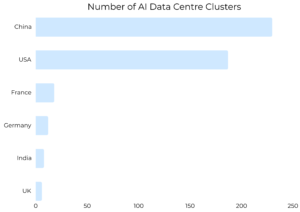
India isn’t building the frontier models. But it may be the world’s biggest proving ground for turning those models into enterprise products at massive scale. That’s where Indian IT’s expertise — integrating systems, managing deployments, understanding enterprise complexity — remains irreplaceable.
What the Recovery Looks Like
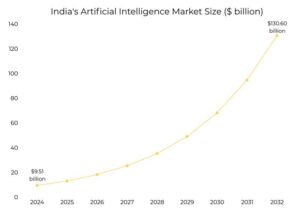
HDFC Securities projects a sharp recovery beginning in 2026, driven by AI-centric engagements. TCS and HCLTech alone are projecting nearly $2 billion in combined annual recurring revenue from AI offerings. India’s AI market, valued at $13 billion in 2025, is projected to reach $130 billion by 2032, with a 39% CAGR.
The investor opportunity is straightforward. Indian IT stocks have been hammered on AI disruption fears — but the companies are already pivoting. They’re winning AI contracts, building new revenue streams, and improving margins as they shift from labour-intensive models to AI-augmented delivery. The market is pricing in a collapse, while firms are reporting AI revenue growth of 17%+ quarter over quarter. That disconnect creates opportunity.
And here’s the part that matters: enterprises can’t just rip out their existing systems and replace them with AI overnight. Banks, insurers, and manufacturers have decades of legacy infrastructure that requires careful integration. Indian IT’s decades-long relationships with these clients, understanding of their systems, and ability to manage complex migrations — that’s not going away. AI doesn’t eliminate the need for systems integrators. It changes what they integrate.
The Honest Take
Is India losing the AI race at the foundational model level? Yes. But the race has more than one track. India isn’t going to out-innovate OpenAI or DeepSeek on foundation models. It doesn’t need to. Its bet is on being the world’s most effective deployer and integrator of AI — and on the sheer scale of its domestic market pulling every global AI player towards it.
For investors, the decision comes down to whether you believe this pivot is real or theatre. The data suggests it’s real. AI revenue is growing faster than legacy services are declining. Deal momentum is accelerating, not slowing. And global tech giants are betting $70+ billion that India becomes a critical AI deployment hub. If you think Indian IT can’t adapt, stay away. If you think adaptation takes time, but the sector has the client relationships and technical chops to make it work, the current valuations might be the entry point.
Cloud was going to kill Indian IT. So was automation. Each time, the sector found a new lane and grew into it. This lane is narrower, and the traffic is faster. But it’s there